

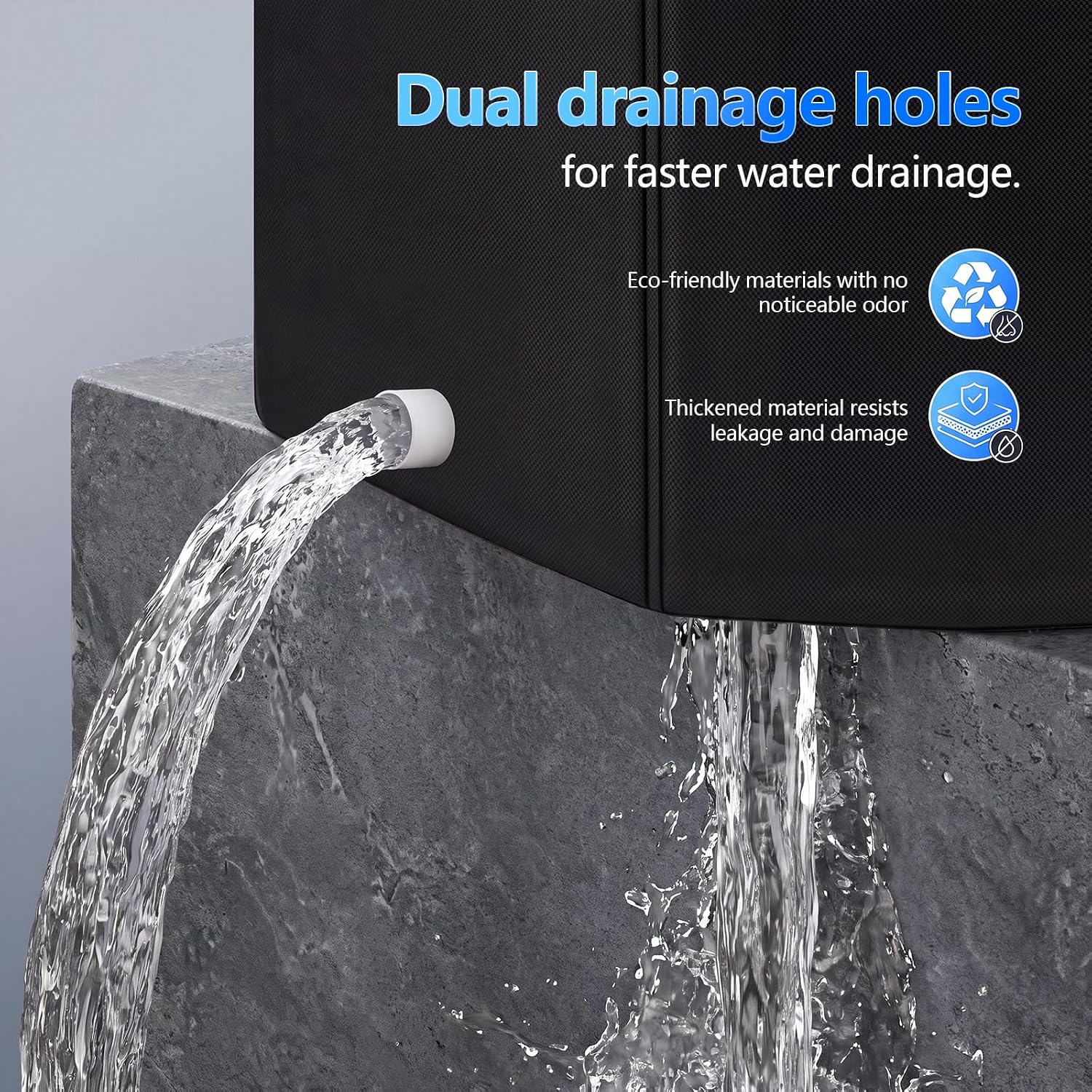
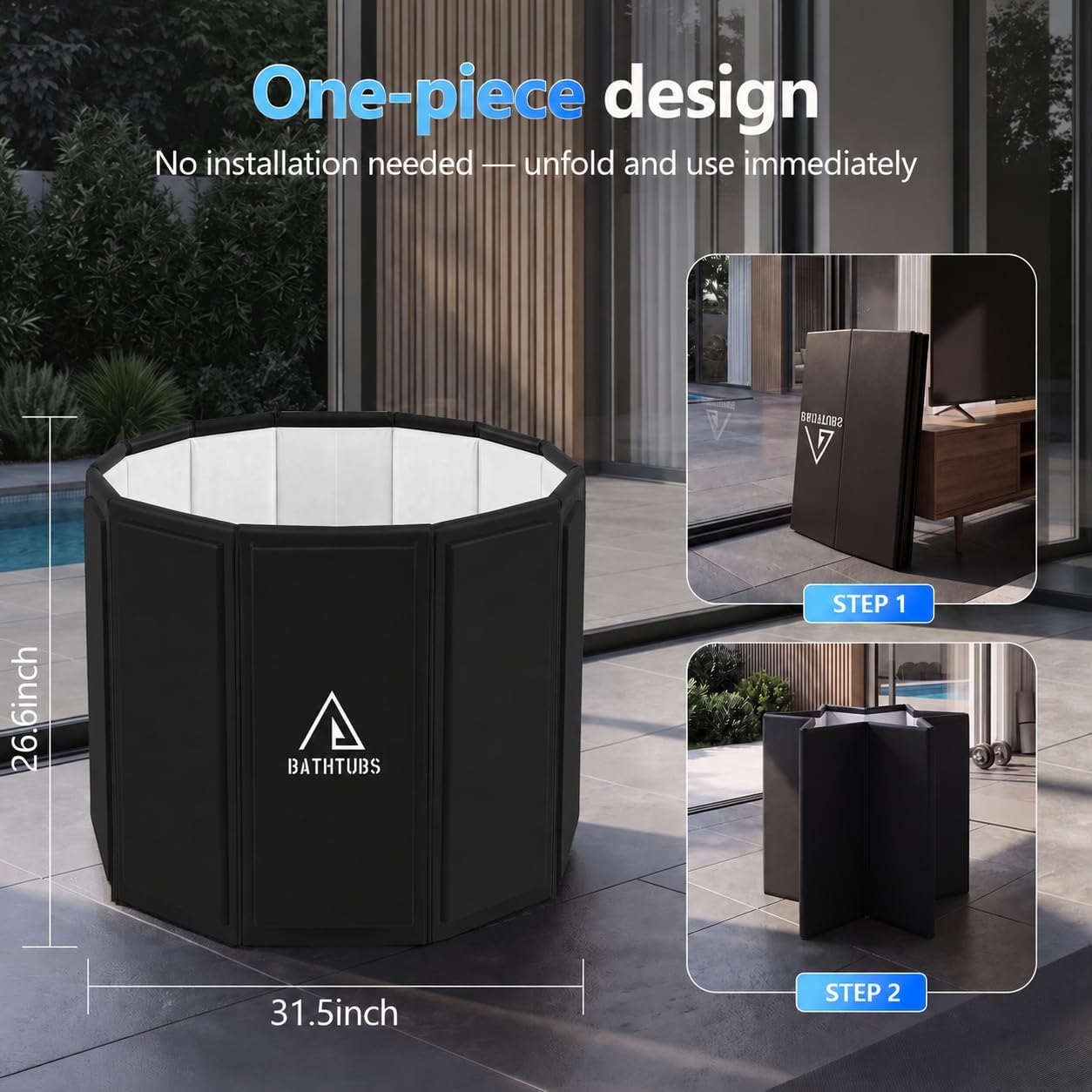
I was recently asked about whether these tubs are kosher for mikveh, and my understanding is no, but I wanted to check with you. The scenario I was told about is as follows: ice baths are popular nowadays, so they make this mini “bathtub pools”. If you only have a shower stall, or a standard bathtub that’s too small for immersion, you could put one of these in, fill it up via the water and you have a vessel large enough to immerse in.
I know that a kli is inherently invalid for immersion. For tum’a purposes, if a kli is bigger than 40 se’ah I believe it is too big for Tuma’h, but for niddah purposes the maximum size doesn’t matter (YD 201:34). The way around this with bathtubs as I understand is that 1) they are fixed to the ground, and 2) they can’t hold water until they’re in place because they have a hole where the drain goes. But as far as I understand, you need both conditions. Is that accurate? B/c this tub comes with two drainage holes, but it’s portable so I would understand it to not help. It can’t really hold water until it is set up and the hole is plugged.
What are your thoughts on this? And are there any “home hacks” you are aware of that could help for those of us living far from a mikveh but without a big bathroom remodel budget?
I think your understanding is basically correct.
The fact that the tub holds more than forty se’ah does not by itself solve the problem. Shulchan Aruch, Yoreh Deah 201:34, makes clear that even a very large כלי can still retain the status of a כלי for these laws.
The basic rule is in YD 201:6:
“צריך שלא יהיו מ’ סאה של מקוה בתוך הכלי שאין טובלים בכלים”
One cannot immerse in forty se’ah of water that are contained in an ordinary vessel.
The Shulchan Aruch then gives the solution in סעיף ז:
“הלוקח כלי גדול… ונקבו נקב המטהרו… וקבעו בארץ ועשהו מקוה הרי זה כשר”
A large vessel can be made suitable by first giving it a sufficient opening and then fixing it permanently into the ground or structure.
That second part is important. If you simply take a portable tub, make a hole in it, and then plug the hole whenever you want to use it, you have essentially restored it to being an ordinary water-holding כלי. The strongest and simplest solution is therefore to make it מחובר לקרקע, permanently installed as part of the building.
For that reason, I would not recommend the foldable cold-plunge tub you showed me. It is specifically designed to be portable. You unfold it, close the drains, fill it, empty it, and move it again. That is exactly the kind of ordinary כלי קיבול that creates the problem.
A much better inexpensive option would be a large freestanding soaking tub that is designed for permanent plumbing installation. For example, there are freestanding tubs in the roughly $600-$700 range with capacities around 90 gallons. These do not require building the expensive framed structure that a drop-in bathtub requires.
The ideal installation would be to take the freestanding tub while its drain opening is still open, permanently install and secure it to the floor, connect it into the building’s plumbing, and only then complete the drain assembly so that it can retain water.
That gives you a case of מחובר לקרקע. It is no longer functioning as a portable vessel that happens to have a removable plug. It has become a permanently installed plumbing fixture and part of the building.
So for someone trying to make an inexpensive home mikveh, I would look for a large freestanding soaking tub intended for permanent installation, rather than a portable cold-plunge pool. That avoids the expense of constructing a surround for a drop-in tub while still addressing the main halachic concern of כלי by making the tub מחובר לקרקע.